The combustibility of a material, also known as flame retardancy, self-extinguishing, flame resistance, flame resistance, fire resistance, flammability and other combustibility, is to assess the ability of the material to resist combustion.
The flammable material sample is ignited with a flame that meets the requirements, and the flame is removed after the specified time. The flammability level is evaluated according to the degree of combustion of the sample. There are three levels. The horizontal test method of the sample is divided into FH1, FH2 , FH3 level three, the vertical test method is divided into FV0, FV1, VF2.
The solid
PCB board is divided into HB board and V0 board.
HB sheet has low flame retardancy and is mostly used for single-sided boards. VO board has high flame retardancy. It is mostly used for double-sided and multi-layer boards that meet the V-1 fire rating requirements. This type of PCB board becomes FR-4 board. V-0, V-1, and V-2 are fireproof grades.
The circuit board must be flame-resistant, cannot burn at a certain temperature, but can only be softened. The temperature at this time is called the glass transition temperature (Tg point), and this value is related to the dimensional stability of the PCB board.
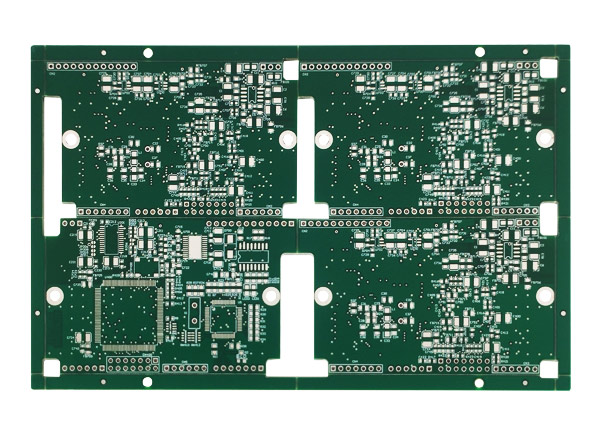
What is a high Tg PCB circuit board and the advantages of using a high Tg PCB?
When the temperature of a high Tg printed board rises to a certain area, the substrate will change from "glass state" to "rubber state". The temperature at this time is called the glass transition temperature (Tg) of the board. In other words, Tg is the highest temperature at which the substrate maintains rigidity.
What are the specific types of PCB boards?
Divided by grade level from bottom to high as follows:
94HB - 94VO - 22F - CEM-1 - CEM-3 - FR-4 are described in detail as follows: 94HB: ordinary cardboard, not fireproof (the lowest grade material, die punching, can not be used as power board) 94V0: flame retardant cardboard (mold Punching) 22F: Single-sided half fiberglass board (die punching) CEM-1: Single-sided fiberglass board (must be drilled by computer, not die punching) CEM-3: Double-sided half fiberglass board (except for double-sided Cardboard is the lowest-end material for double-sided boards. Simple double-sided boards can use this material, which is 5~10 yuan/square meter cheaper than FR-4.)
FR-4: Double-sided fiberglass board
The circuit board must be flame-resistant, cannot burn at a certain temperature, but can only be softened. The temperature at this time is called the glass transition temperature (Tg point), and this value is related to the dimensional stability of the PCB board.

What is a high Tg PCB circuit board and the advantages of using high Tg PCB
When the temperature rises to a certain area, the substrate will change from "glassy" to "rubbery", and the temperature at this time is called the glass transition temperature (Tg) of the plate. In other words, Tg is the highest temperature (°C) at which the substrate maintains rigidity.
That is to say, ordinary PCB substrate materials not only produce softening, deformation, melting and other phenomena at high temperatures, but also show a sharp decline in mechanical and electrical characteristics (I think you don’t want to see the classification of PCB boards and see this situation in your own products. ).
The general Tg plate is more than 130 degrees, the high Tg is generally more than 170 degrees, and the medium Tg is about more than 150 degrees.
Usually PCB printed boards with Tg ≥ 170°C are called high Tg printed boards. As the Tg of the substrate increases, the heat resistance, moisture resistance, chemical resistance, stability and other characteristics of the printed board will be improved and improved. The higher the TG value, the better the temperature resistance of the board, especially in the lead-free process, where high Tg applications are more common.
High Tg refers to high heat resistance. With the rapid development of the electronics industry, especially the electronic products represented by computers, the development of high functionality and high multilayers requires higher heat resistance of PCB substrate materials as an important guarantee. The emergence and development of high-density mounting technologies represented by SMT and CMT have made PCBs more and more inseparable from the support of high heat resistance of substrates in terms of small aperture, fine wiring, and thinning.
Therefore, the difference between the general FR-4 and the high Tg FR-4: it is in the hot state, especially after moisture absorption.
Under heat, there are differences in the mechanical strength, dimensional stability, adhesion, water absorption, thermal decomposition, and thermal expansion of the materials. High Tg products are obviously better than ordinary PCB substrate materials. In recent years, the number of customers requiring the production of high Tg printed boards has increased year by year.
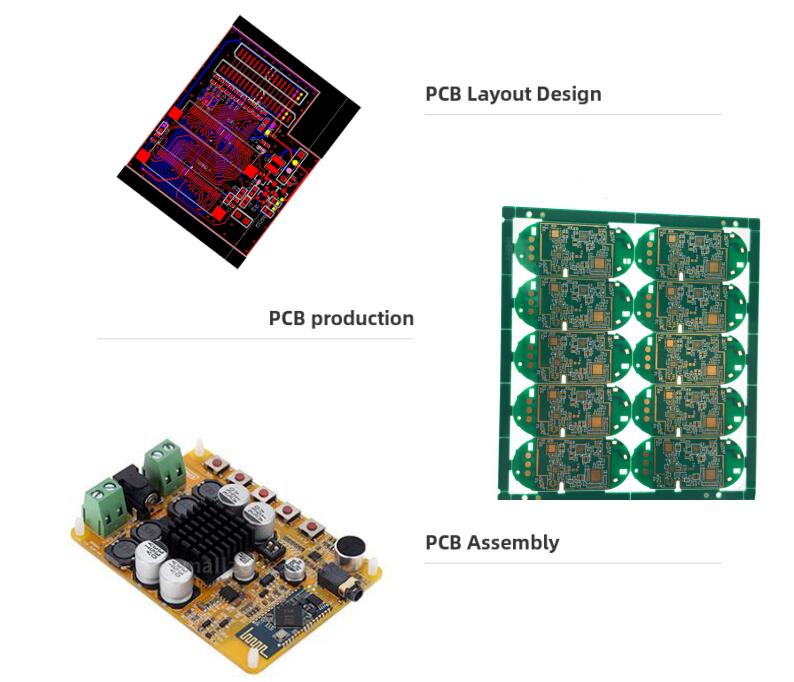
With the development and continuous progress of electronic technology, new requirements are constantly being put forward for printed circuit board substrate materials, thereby promoting the continuous development of copper clad laminate standards. At present, the main standards for substrate materials are as follows.
① National Standards At present, my country's national standards for the classification of PCB materials for substrate materials include GB/T4721-47221992 and GB4723-4725-1992. The copper clad laminate standard in Taiwan, China is the CNS standard, which is based on the Japanese JIs standard. , Released in 1983.
②Other national standards include: Japanese JIS standards, American ASTM, NEMA, MIL, IPc, ANSI, UL standards, British Bs standards, German DIN and VDE standards, French NFC and UTE standards, and Canadian CSA Standards, AS standards in Australia, FOCT standards in the former Soviet Union, international IEC standards, etc.
The suppliers of original PCB design materials are common and commonly used: Shengyi \ Jiantao \ International, etc.
● Accepted documents: protel autocad powerpcb orcad gerber or real board copy board, etc.
● Board types: CEM-1, CEM -3 FR4, high TG material;
● Maximum board size: 600mm*700mm (24000mil*27500mil)
● Processing board thickness: 0.4mm-4.0mm (15.75mil-157.5mil)
● Maximum processing layers: 16Layers
● Copper foil layer Thickness: 0.5-4.0 (oz)
● Finished board thickness tolerance: +/-0.1mm (4mil)
● Forming dimension tolerance: computer milling: 0.15mm (6mil) Die punching plate: 0.10mm (4mil)
● Minimum line width/spacing :0.1mm(4mil) Line width control ability: <+-20%
● The minimum drilling hole diameter of the finished product: 0.25mm (10mil) The minimum punching hole diameter of the finished product: 0.9mm (35mil) The tolerance of the finished product hole diameter: PTH: +-0.075mm( 3mil) NPTH: +-0.05mm(2mil)
● Finished hole wall copper thickness: 18-25um (0.71-0.99mil)
● Minimum SMT patch spacing: 0.15mm (6mil)
● Surface coating: chemical immersion gold, tin spray , The whole board is nickel-plated gold (water/soft gold), silk screen blue glue, etc.
● Solder mask thickness on the board: 10-30μm (0.4-1.2mil)
● Peeling strength: 1.5N/mm (59N/mil)
● Resistance Solder film hardness: >5H
● Solder resistance plug hole capacity: 0.3-0.8mm (12mil-30mil)
● Dielectric constant: ε= 2.1-10.0
● Insulation resistance: 10KΩ-20MΩ
● Characteristic impedance: 60 ohm±10%
● Thermal shock : 288℃, 10 sec
● Warpage of finished board: <0.7%
● Product application: communication equipment, automotive electronics, instrumentation, global positioning system, computer, MP4, power supply, home appliances, etc.

According to PCB board reinforcement materials, it is generally divided into the following types:
1. Phenolic PCB paper substrate
Because this kind of PCB board is composed of paper pulp, wood pulp, etc., it sometimes becomes cardboard, V0 board, flame-retardant board and 94HB, etc. Its main material is wood pulp fiber paper, which is a kind of PCB synthesized by phenolic resin pressure. plate. This kind of paper substrate is not fireproof, can be punched, has low cost, low price, and low relative density. We often see phenolic paper substrates such as XPC, FR-1, FR-2, FE-3, etc. And 94V0 belongs to flame-retardant paperboard, which is fireproof.
2. Composite PCB substrate
This kind of powder board is also called powder board, with wood pulp fiber paper or cotton pulp fiber paper as reinforcement material, and glass fiber cloth as the surface reinforcement material at the same time. The two materials are made of flame-retardant epoxy resin. There are single-sided half-glass fiber 22F, CEM-1 and double-sided half-glass fiber board CEM-3, among which CEM-1 and CEM-3 are the most common composite base copper clad laminates.
3. Glass fiber PCB substrate
Sometimes it also becomes epoxy board, glass fiber board, FR4, fiber board, etc. It uses epoxy resin as adhesive and glass fiber cloth as reinforcing material. This kind of circuit board has a high working temperature and is not affected by the environment. This kind of board is often used in double-sided PCB, but the price is more expensive than the composite PCB substrate, and the common thickness is 1.6MM. This kind of substrate is suitable for various power supply boards, high-level circuit boards, and is widely used in computers, peripheral equipment, and communication equipment.
FR-4

4. Others


 Englishen


